
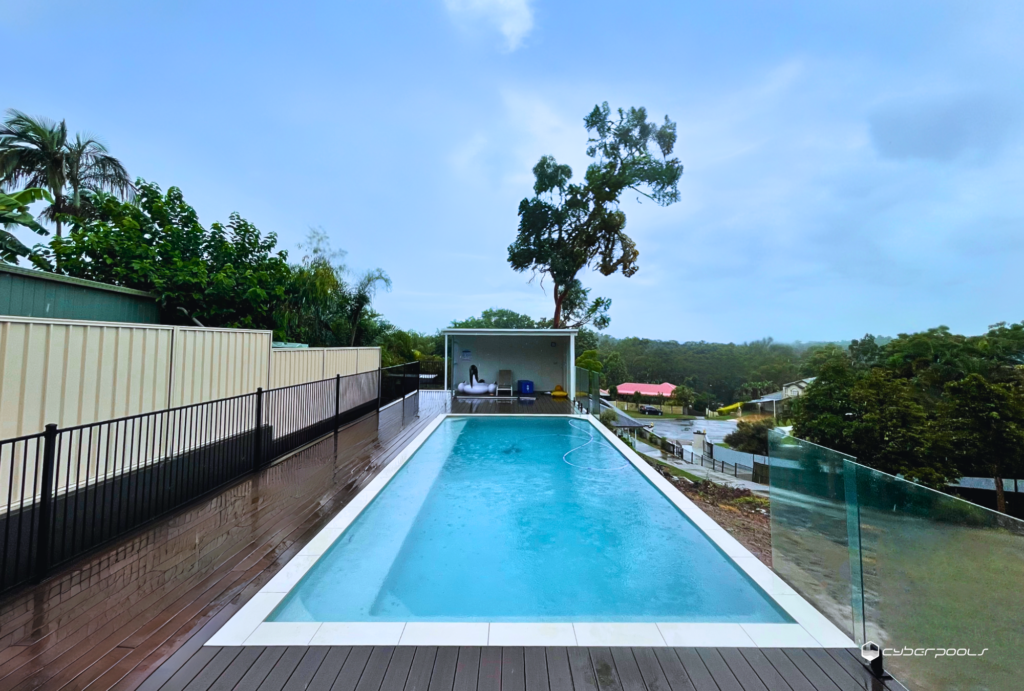
Magnesium pools require regular water testing, cleaning, filtration and sanitiser management—just like other swimming pools. The main difference is that owners must also monitor the concentration of the approved magnesium-mineral blend used by their system.
For Brisbane pool owners, the most important maintenance periods are during hot, humid weather, after heavy rain and following high pool use. These conditions can change water balance, increase sanitiser demand and introduce organic material that encourages algae growth.
A consistent magnesium pool maintenance routine should include weekly water testing, regular brushing and debris removal, filter care, equipment inspections and mineral testing after pool water has been lost or diluted.
Quick Answer: How Do You Maintain a Magnesium Pool?
To maintain a magnesium pool:
- Test the pH and sanitiser level every week.
- Remove leaves and empty the skimmer and pump baskets.
- Brush the walls, steps, corners and waterline.
- Run the pump and filtration system for the recommended period.
- Clean or backwash the filter when required.
- Inspect the chlorinator cell and other equipment.
- Test the mineral concentration before completing a mineral top-up.
- Recheck the water after storms, heavy rain or high swimmer use.
The correct water-balance ranges, chlorinator settings and mineral concentration depend on the installed system. Always follow the manufacturer’s instructions for the pool’s equipment, surface and mineral blend.
Magnesium Pool Maintenance at a Glance
| Frequency | Recommended maintenance |
| Several times a week | Remove leaves, insects and visible debris |
| Weekly | Test pH and sanitiser; check water clarity and equipment operation |
| Fortnightly | Brush walls, steps, corners and areas with limited circulation |
| Monthly | Check alkalinity and other relevant water-balance readings; inspect the filter and chlorinator cell |
| Every few months | Professionally test the water and check the mineral concentration |
| After heavy rain | Test pH, sanitiser and minerals; remove debris and inspect the water level |
| After water loss | Test the mineral concentration before adding more minerals |
This schedule is a general guide. Pools exposed to trees, frequent swimming, pets, warm water or severe weather may need more frequent attention.
Weekly Magnesium Pool Maintenance Checklist
A weekly routine is the most effective way to keep water-quality changes under control.
1. Test the pool water
Test the pH and available sanitiser using a suitable home testing kit. A magnesium pool is not normally chlorine-free. Most systems still use a compatible chlorinator or another approved process to produce the sanitiser needed to keep the water hygienic.
Do not assume the water is balanced simply because it looks clear. Sanitiser and pH can move outside the recommended ranges before the pool’s appearance changes.
2. Check water clarity
The water should be clear enough for the pool floor to remain visible. Cloudiness, unusual colour, foaming or slippery surfaces can indicate a problem with water balance, filtration, circulation or sanitation.
Brisbane City Council identifies dirty or stagnant water, organic build-up and pools without working filtration and chlorination—or an equivalent system—as potential health and safety concerns.
3. Remove leaves and organic material
Skim the surface, empty the skimmer basket and remove debris from the floor. Check the pump basket as well, switching off and isolating the equipment first if required by its operating instructions.
Leaves, soil, grass and insects consume sanitiser as they break down. Prompt removal is particularly important after Brisbane storms.
4. Brush the pool
Brush the walls, steps, benches, corners and waterline. Pay particular attention to shaded areas and places where water movement is limited. These are often the first locations where algae or biofilm becomes visible.
Use equipment suitable for the pool’s surface to avoid unnecessary damage.
5. Inspect the equipment
Check for:
- Reduced flow from return jets
- Unusual pump sounds
- Leaks around pipes or equipment
- Air entering the system
- Chlorinator warning lights or error messages
- An unexpected rise in filter pressure
Early investigation can prevent a small circulation problem from becoming a larger water-quality issue.
Monthly Magnesium Pool Maintenance Checklist
Complete a more detailed inspection approximately once a month:
- Test total alkalinity and other readings specified by the system manufacturer.
- Check filter pressure and clean or backwash the filter when required.
- Inspect the chlorinator cell for scale or mineral deposits.
- Clean the waterline.
- Confirm that return jets are circulating water throughout the pool.
- Review the pump and chlorinator operating periods.
- Inspect accessible valves, seals and pipework for leaks.
- Check that the water level allows the skimmer and pump to work correctly.
Avoid relying on universal chemical targets found online. Suitable operating ranges may vary between mineral systems, chlorinators and pool finishes.
When Should Magnesium Minerals Be Topped Up?
A magnesium pool does not necessarily need more minerals every month or on a fixed seasonal date. The correct approach is to test the mineral concentration and add only the amount required by the installed system.
A mineral top-up may be necessary after:
- Filter backwashing
- Pool overflow
- Splash-out
- A plumbing or shell leak
- Partial draining
- Lowering the water level after rain
- Replacing a significant amount of pool water
Does evaporation remove magnesium minerals?
Evaporation removes water, but most dissolved minerals remain in the pool. Replacing evaporated water may change the concentration, but it does not automatically mean another full bag or dose is needed.
By contrast, backwashing, draining, overflow and leaks physically remove mineral-containing water. These events are more likely to create a genuine need for a top-up.
How much magnesium should be added?
The required quantity depends on:
- The current test result
- The system’s recommended concentration
- The pool’s water volume
- The mineral blend being used
- The amount of water recently replaced
Use only products approved for the installed mineral system. After dosing, circulate the water and follow the manufacturer’s instructions concerning brushing, filtration and retesting.
Managing Magnesium Pool Algae in Brisbane
Can magnesium pools get algae?
Yes. A magnesium pool can develop algae when sanitiser levels are inadequate or when circulation, filtration or water balance is poor.
The presence of magnesium minerals does not make a pool algae-proof. Effective sanitation and filtration remain essential. Queensland Health also promotes proactive management to reduce contamination risks in recreational water.
Why is algae more likely during a Brisbane summer?
Brisbane’s subtropical conditions can combine several algae triggers:
- Warm pool water
- High swimmer use
- Humid weather
- Leaves, pollen and soil entering the pool
- Heavy rainfall
- Sanitiser dilution
- Changes in pH
- Reduced circulation in steps, corners or ledges
Hot weather may also increase sanitiser demand. Pump and chlorinator settings that work during winter may therefore be insufficient during summer.
What should owners do after heavy rain?
After a major Brisbane storm:
- Remove leaves, branches and visible debris.
- Check the water level and equipment.
- Lower excess water using an approved method if necessary.
- Test pH and sanitiser.
- Test the mineral concentration if water has overflowed or been discharged.
- Brush the walls, steps and low-circulation areas.
- Run the filtration system as recommended.
- Retest before swimming.
Do not add minerals simply because the pool looks cloudy or green. Additional magnesium will not correct an underlying sanitiser, circulation or filtration problem.
What should you do if a magnesium pool turns green?
A green pool may be caused by algae, but colour can also be related to metals or another water-balance issue. Test the water before applying treatment.
The response may require:
- Correcting the pH
- Restoring the appropriate sanitiser level
- Brushing affected surfaces
- Cleaning or backwashing the filter
- Increasing filtration temporarily
- Checking the chlorinator and circulation equipment
- Obtaining a professional water analysis
Avoid swimming until the water is clear, the pool floor is visible and the readings meet the system manufacturer’s requirements.
Common Magnesium Pool Maintenance Mistakes
Treating magnesium as a sanitiser
Magnesium minerals form part of the swimming system but do not usually replace the need for chlorine or another approved sanitiser.
Adding minerals without testing
Adding mineral products according to the calendar rather than a test result can produce an incorrect concentration and unnecessary expense.
Ignoring the pool after rain
Heavy rainfall can introduce debris, alter pH, dilute sanitiser and cause mineral-rich water to overflow. Test the pool promptly after significant storms.
Using incompatible pool chemicals
Not every saltwater or chlorine-pool chemical is suitable for every magnesium system. Confirm compatibility before using shock treatments, algaecides, clarifiers or other products.
Neglecting circulation
A pool may record acceptable water readings near the skimmer while still having low-circulation areas around steps, corners or benches. Brushing and correct return-jet positioning help treated water reach these areas.
Changing several readings at once
Large, simultaneous chemical adjustments make it difficult to identify what worked and may cause other readings to move. Make corrections methodically, circulate the water and retest.
Forgetting the filter and chlorinator
Learning how to maintain a magnesium pool involves more than adding minerals. The pump, filter and chlorination equipment must operate effectively for the water to remain clear and hygienic.
Can You Maintain a Magnesium Pool Yourself?
Many owners can handle routine magnesium pool care themselves. Weekly testing, cleaning, brushing and visual equipment checks can usually be performed using suitable tools and the system’s operating guide.
Professional assistance is recommended when:
- Test results remain inconsistent.
- The pool repeatedly develops algae.
- Water stays cloudy after treatment.
- The chlorinator displays an error.
- Flow or filter pressure changes unexpectedly.
- The pool appears to be losing water.
- The correct product or dosage is unclear.
- The pool surface develops staining or scale.
A periodic professional water test can also identify readings not covered by a basic home kit.
Why Choose Cyberpools for a Magnesium Pool in Brisbane?
Cyberpools designs and builds custom concrete magnesium pools across Redland City, Bayside Brisbane, Brisbane and surrounding service areas. Its team understands how South East Queensland’s heat, storms, rainfall and seasonal swimming patterns can affect pool design, equipment selection and ongoing maintenance.
Homeowners choose Cyberpools for:
- More than 10 years of industry experience
- Custom concrete magnesium pool designs
- In-house engineering
- Equipment selected for the individual pool
- End-to-end project management
- Practical handover and maintenance guidance
- Knowledge of Brisbane and Redland City conditions
- SPASA certification for 2024
Maintenance advice should reflect the pool’s volume, finish, mineral system, filtration equipment and usage—not a generic formula.
For advice about designing, building or maintaining a magnesium pool, call Cyberpools on 1300 473 691 or contact Cyberpools online.
Frequently Asked Questions
How often should magnesium pool minerals be topped up?
There is no universal schedule. Test the mineral concentration every few months and after backwashing, overflow, leaks, partial draining or significant water replacement. Add only the quantity required for the pool and installed system.
Do magnesium pools get algae?
Yes. Magnesium pool algae can develop when sanitiser, filtration, circulation or water balance is inadequate. Warm weather, heavy rain and organic debris can increase the risk in Brisbane.
Is a magnesium pool chlorine-free?
Usually not. Most magnesium pool systems still use a compatible chlorinator to maintain an effective sanitiser level. The minerals do not replace the pool’s sanitation process.
Can I maintain a magnesium pool myself?
Most owners can perform routine water testing, cleaning and equipment checks. Professional testing or servicing is advisable when water-quality problems persist or equipment is not operating normally.
Does evaporation remove magnesium from pool water?
Most dissolved minerals remain behind when water evaporates. Minerals are mainly lost when pool water leaves through backwashing, overflow, splash-out, draining or leaks.
What should I check after heavy rain?
Remove debris and test the pH, sanitiser and, where water has been lost or diluted, mineral concentration. Also inspect the water level, filtration system and chlorinator before swimming.
How often should a magnesium pool be tested in summer?
Test at least weekly and more frequently after storms, parties, extended swimming or unusually hot weather. Follow the equipment manufacturer’s testing and operating instructions.
