
Magnesium pools offer an alternative to conventional saltwater and manually chlorinated pools, but they are often misunderstood. Homeowners commonly ask whether they contain chlorine, how much maintenance they require, whether an existing pool can be converted and what makes the water feel different.
This comprehensive magnesium pool FAQ answers the most common questions asked by homeowners across Brisbane, Redland City and South East Queensland.
Quick answer: A magnesium pool is a mineral pool that uses a formulated blend containing magnesium chloride. A compatible mineral chlorinator uses the chloride in the water to produce chlorine for sanitisation. The water may feel softer than conventional pool water, but the pool still requires filtration, circulation, sanitisation, testing and regular mineral-level checks.
Magnesium Pool Basics
1. What is a magnesium pool?
A magnesium pool is a mineral pool containing a formulated blend of magnesium chloride and, depending on the product, other minerals. It normally uses a compatible chlorinator to produce the chlorine needed to sanitise the water.
The magnesium blend does not replace chlorine, filtration or water balancing. Instead, it changes the mineral composition of the water and may create a softer-feeling swimming experience.
2. Is a magnesium pool chlorine-free?
No. Most magnesium pools are not chlorine-free.
A compatible mineral chlorinator converts chloride in the water into chlorine, which helps control bacteria, algae and other contaminants. The difference is how the sanitiser is produced and the type of mineral blend used—not the complete absence of chlorine.
Claims that magnesium alone sanitises a swimming pool should be treated cautiously. Safe water still depends on an effective sanitiser, adequate circulation, filtration and balanced chemistry.
3. What is the difference between a magnesium pool and a saltwater pool?
The principal difference is the mineral blend placed in the water.
A conventional saltwater pool primarily uses sodium chloride. A magnesium pool uses a formulated product containing magnesium chloride, sometimes combined with other minerals. Both systems usually rely on electrolysis to generate chlorine.
| Feature | Magnesium pool | Conventional saltwater pool |
| Main water additive | Magnesium-based mineral blend | Sodium chloride |
| Primary sanitiser | Chlorine generated by a compatible chlorinator | Chlorine generated by a salt chlorinator |
| Water feel | Often described as soft or silky | Familiar saltwater feel |
| Mineral testing | Required | Salt-level testing required |
| Filtration and circulation | Required | Required |
| Regular water balancing | Required | Required |
For a more detailed assessment, read Cyberpools’ guide to choosing between magnesium, chlorine and saltwater pools.
4. Is a magnesium pool better than a saltwater pool?
A magnesium pool is not automatically better for every property. The right choice depends on the owner’s preferred swimming experience, budget, existing equipment and approach to maintenance.
Magnesium systems can suit homeowners who value soft-feeling mineral water and are comfortable monitoring mineral concentrations. A conventional saltwater system may suit owners who prefer a familiar setup with widely available products.
The complete pool design and quality of the installation usually matter more than the water system alone.
Magnesium Pool Costs
5. How much does a magnesium pool cost in Brisbane?
The cost of a new concrete magnesium pool depends on its dimensions, depth, site access, excavation conditions, engineering, finishes and additional features. There is no reliable one-price-fits-all figure because every property and design presents different requirements.
A magnesium system is only one component of the overall project. Earthworks, the concrete structure, approvals, interior finishes, coping, fencing, landscaping and site-specific construction can have a greater effect on the final quotation.
Cyberpools’ Brisbane magnesium pool cost guide explains these factors in more detail.
6. Are magnesium pools more expensive than saltwater pools?
A magnesium system may have a higher initial equipment or mineral cost than a basic saltwater system. However, the difference should be considered within the total cost of designing and building a concrete pool.
The final investment is affected by:
- Pool size, depth and shape
- Excavation access and ground conditions
- Structural engineering
- Interior finishes and waterline tiles
- Coping and surrounding paving
- Heating, lighting and automation
- Integrated spas or water features
- Retaining structures and drainage
- Landscaping and compliant fencing
Homeowners should compare the inclusions, equipment and construction standards in each quotation rather than making a decision from the total price alone.
7. Are magnesium pools expensive to maintain?
Maintenance costs vary according to pool size, swimmer load, local weather, water loss and equipment efficiency.
Typical expenses include pump operation, filtration, water testing, mineral replenishment, balancing products and occasional professional servicing. Splash-out, backwashing, leaks and overflow can remove minerals and increase the need for top-ups.
Testing before adding minerals helps prevent unnecessary product use and avoid over-correcting the water.
Comfort, Health and Safety
8. Are magnesium pools good for sensitive skin?
Many swimmers describe properly balanced magnesium pool water as soft and comfortable. Some people may prefer its feel to that of a conventional pool, particularly when the water chemistry is carefully managed.
Individual reactions vary, however. Comfort also depends on pH, chlorine levels, combined chlorine and overall water balance. A magnesium pool should not be promoted as a medical treatment.
Cyberpools discusses this topic further in Is a Magnesium Pool Worth It? Benefits for Skin, Eczema and Sensitive Skin.
9. Can a magnesium pool cure eczema?
No. A magnesium pool cannot be claimed to cure eczema or another health condition.
Some swimmers with sensitive skin may prefer the feel of balanced mineral water, but experiences differ. People with eczema or another ongoing skin condition should follow advice from an appropriately qualified healthcare professional.
Showering after swimming and maintaining correct pool chemistry may also help reduce exposure to residual pool water.
10. Why can any swimming pool irritate the skin or eyes?
Eye or skin irritation is commonly associated with unsuitable pH, excessive or insufficient sanitiser, combined chlorine or an overall water imbalance. It is not determined solely by whether the pool uses salt or magnesium minerals.
When irritation occurs repeatedly, owners should test the complete water balance instead of assuming that adding more minerals will correct the problem. Professional water testing may be necessary when the cause is unclear.
Magnesium Pool Maintenance
11. How do you maintain a magnesium pool?
A magnesium pool requires regular testing, cleaning, circulation and equipment checks.
A practical routine includes:
- Testing pH and sanitiser levels
- Checking water clarity and circulation
- Removing leaves and surface debris
- Emptying pump and skimmer baskets
- Brushing pool walls, steps and the waterline
- Cleaning or backwashing the filter when required
- Inspecting the chlorinator and its cell
- Checking mineral concentration according to the system instructions
- Investigating unexplained water loss
Maintenance requirements differ between products, so owners should follow the equipment and mineral manufacturer’s operating instructions.
For more information on keeping your pool in top condition, see our Magnesium Pool Maintenance: A Brisbane Owner’s Guide.
12. How often should magnesium minerals be topped up?
Magnesium minerals should be added according to test results, not automatically on a fixed date.
Splash-out, backwashing, overflow, leaks and partial draining remove water and minerals from the pool. Brisbane storms and periods of heavy swimming can therefore affect the top-up schedule.
Evaporation behaves differently: water evaporates, but dissolved minerals generally remain behind. Adding minerals without testing after evaporation may make the concentration too high.
13. Do magnesium pools get algae?
Yes. A magnesium pool can develop algae when sanitiser levels, circulation or filtration are inadequate.
Warm weather, storms, organic debris and heavy swimmer loads can increase demand on the sanitising system. Magnesium minerals do not make a pool immune to algae.
Treatment may involve brushing the surfaces, cleaning the filter, correcting water chemistry and applying a compatible treatment. Repeated algae growth may indicate an equipment, circulation or water-balance issue that requires professional investigation.
14. Can owners maintain a magnesium pool themselves?
Many owners can complete routine tasks such as testing the water, removing debris, brushing surfaces and checking equipment. The owner must still understand the mineral system and use products compatible with the pool surface and chlorinator.
Professional assistance is recommended when:
- Commissioning a new mineral system
- Correcting a major water imbalance
- Investigating recurring algae or cloudy water
- Diagnosing chlorinator or filtration problems
- Assessing unexplained mineral loss
- Preparing the pool after severe weather or extended inactivity
Pool chemicals should never be mixed together, and unmeasured quantities should not be added without reliable test results.
Converting an Existing Pool
15. Can a saltwater pool be converted to magnesium?
Many saltwater pools can be converted to a magnesium mineral system without rebuilding the pool.
Before conversion, the water should be tested and the pump, filter, chlorinator, pool surface and plumbing assessed. Not every chlorinator is approved for every mineral blend, so compatibility must be confirmed before the minerals are introduced.
Read the complete guide to converting a saltwater pool to a magnesium system.
16. Does a pool need to be drained before conversion?
A complete drain is not always necessary. The decision depends on the condition of the water, its existing mineral composition, dissolved solids and compatibility with the proposed system.
Testing should be completed before water is removed. Draining unnecessarily wastes water, while retaining unsuitable water may make the new mineral system difficult to balance.
The condition of the pool structure and local groundwater risks should also be considered before completely emptying an in-ground pool.
17. How long does a magnesium pool conversion take?
A straightforward conversion may be completed within one or two days once equipment compatibility and water condition have been confirmed.
Additional time may be required when the pool has leaks, scaling, damaged equipment, severely unbalanced water or an incompatible chlorinator. The system may also require circulation, retesting and calibration after the initial conversion.
The final timeframe should be based on an inspection of the existing pool rather than a generic estimate.
Construction and Approvals
18. How long does it take to build a concrete magnesium pool?
The construction period depends on design complexity, access, engineering, approvals, weather and material availability.
The physical build commonly moves through these stages:
- Site assessment and design
- Engineering and building approval
- Excavation
- Steel reinforcement and plumbing
- Concrete application and curing
- Coping, tiling and surrounding works
- Equipment and electrical installation
- Interior finishing
- Filling, mineral-system commissioning and handover
A realistic project program should include planning and approvals as well as the onsite construction period. Cyberpools explains the process in its concrete pool build timeline for Brisbane.
19. Is approval required to build a pool in Brisbane or Redland City?
A new swimming pool generally requires building approval and must comply with Queensland pool-safety requirements. The property’s boundaries, easements, overlays, existing structures and proposed pool location can affect the approval pathway.
Associated elements such as decks, retaining walls, pool fencing and structures near boundaries may create additional requirements.
Owners should obtain property-specific advice before construction begins. Cyberpools can coordinate design, engineering, approval and certification requirements as part of its end-to-end building process.
To learn more about the approval process, read our Pool Approvals in Redland City and Brisbane: A Homeowner’s Guide.
20. What are Queensland’s pool-fencing requirements?
Queensland swimming pools must have a compliant safety barrier that is maintained after construction. Gates must operate correctly, and objects or vegetation around the barrier must not create climbable access.
Owners are responsible for maintaining compliance even after a pool has been approved. A licensed pool-safety inspector should be consulted when certification or property-specific compliance advice is required.
Magnesium Pool Builders Across Redland City
Site access, block conditions, overlays and the way a household plans to use its outdoor space can vary between Redland City suburbs. Cyberpools provides local design and construction support for homeowners considering custom concrete magnesium pools in:
Each suburb page provides more locally relevant information about pool planning, site considerations and Cyberpools’ service coverage. For a broader overview, visit the guide to magnesium pool builders serving Redland City and Bayside Brisbane.
Featured Cyberpools Project in South East Queensland
Seeing a completed project can help you understand how a magnesium pool, surrounding landscape and overall design come together. Here’s one example of a custom pool built by Cyberpools in South East Queensland.


6.5m × 4.0m Magnesium Pool in Everton Park
Cyberpools completed a custom 6.5-metre by 4.0-metre magnesium pool in Everton Park, Queensland.
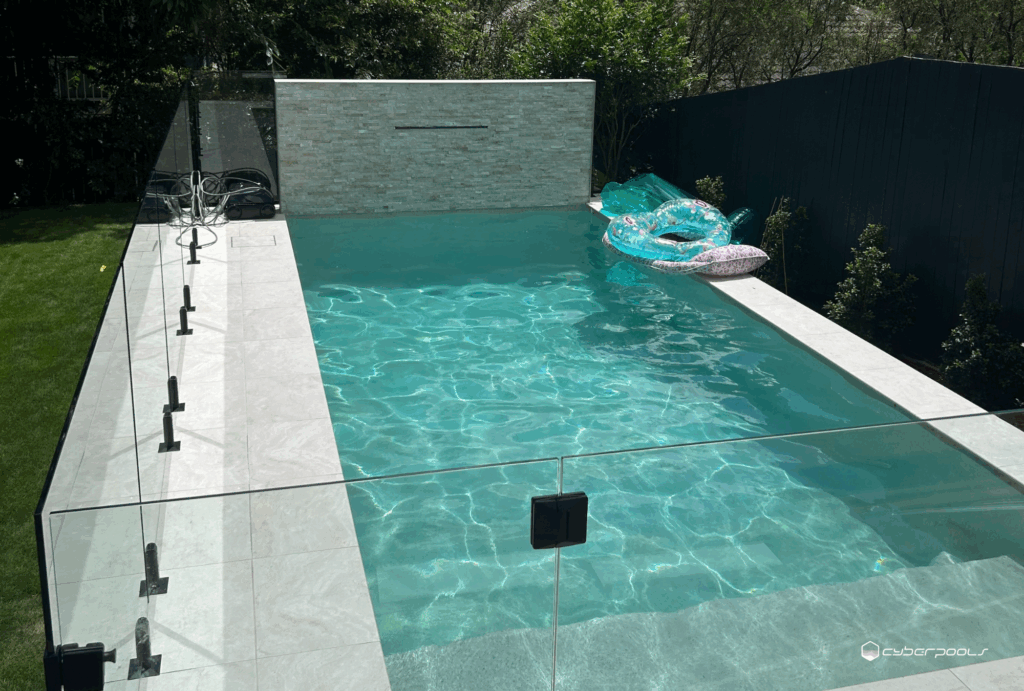
The design incorporates a reverse edge, rear fencing and a smooth white base with Blue Glass NZ polished pebble. Ash Marblano coping tiles from The Pool Tile Company create a refined border around the pool.
This project demonstrates that a magnesium pool is not defined by its water-treatment system alone. Its appearance and usability also depend on its dimensions, edge treatment, interior selection, coping and connection with the surrounding landscape.
Everton Park project details:
- Location: Everton Park, Queensland
- Dimensions: 6.5m × 4.0m
- Water system: Magnesium mineral system
- Edge design: Reverse edge
- Interior: Smooth white base with Blue Glass NZ polished pebble
- Coping: Ash Marblano tiles
- Additional feature: Rear pool fencing
Is a Magnesium Pool Right for Your Property?
A magnesium pool may suit homeowners seeking a custom concrete pool with soft-feeling mineral water. The decision should account for the entire project—not only the mineral blend.
Important considerations include:
- Pool design and intended use
- Site access and ground conditions
- Equipment and mineral compatibility
- Construction quality
- Water-testing requirements
- Ongoing mineral replenishment
- Maintenance support
- Approvals and safety compliance
Cyberpools has more than a decade of experience delivering custom concrete pools across Brisbane, Redland City and other parts of South East Queensland. Its team provides tailored design, in-house engineering support and end-to-end project management.
To discuss a new magnesium pool or assess an existing pool for conversion, call Cyberpools on 1300 473 691 or contact the Cyberpools team online.
