
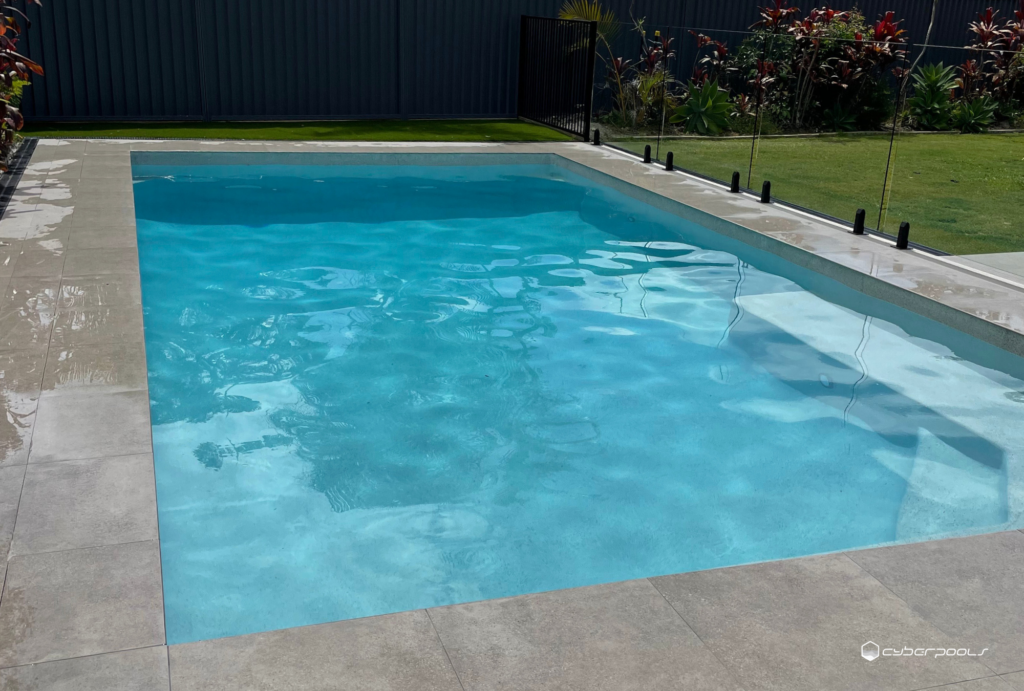
A small backyard doesn’t rule out a pool. Some of the most practical small backyard pool ideas Brisbane homeowners are considering are plunge pools and compact magnesium pool designs — both built specifically to work within tighter block sizes, narrow side yards and the smaller lots that have become common across newer estates. The short answer for anyone worried their yard is “too small” is this: if there’s enough clear space for basic access and the required setbacks, there’s usually a pool option worth exploring. What changes with a smaller site is the shape, size and sometimes the layout of surrounding features — not necessarily whether a pool is possible at all.
Why Smaller Backyards Are Changing The Way People Think About Pools
Blocks across Redland City and greater Brisbane have generally been shrinking for years, and outdoor living areas have shrunk along with them. Where a previous generation might have had room for a full lap pool and a wide entertaining area, plenty of newer homes are working with a courtyard-style backyard, a narrow side strip, or a compact rear yard hemmed in by fencing, easements or a granny flat.
This has pushed pool design in a more compact direction. Rather than a scaled-down version of a large pool, a plunge pool small backyard design is typically planned from the ground up around a smaller footprint, so the water still feels proportionate to the space rather than squeezed into it.
Plunge Pools: The Small-Yard Specialist
A plunge pool is generally a smaller, deeper pool intended for cooling off, floating, light exercise or simply sitting in the water, rather than lap swimming. Because they don’t need long, straight swim lanes, they can be shaped to fit sites that a standard pool simply couldn’t.
This is where a plunge pool small yard approach tends to earn its reputation. A plunge pool can often be positioned along a boundary line, tucked into a courtyard, or set close to the house to free up the rest of the yard for outdoor living. For a pool for narrow block situations in particular, a plunge pool can often be one of the few in-ground options that realistically fit once setbacks, fencing and access paths are accounted for.
It’s also worth being upfront that a mini pool is not automatically a “starter” or lesser option. Depth, finishes, heating, water treatment and features like spa jets or a swim current can all still be included in a smaller pool — the reduction in size doesn’t necessarily mean a reduction in what the pool can offer day to day.
Pool Shapes And Layouts That Work Harder In Limited Space
When space is limited, shape and placement matter more than they would on a larger block. A few approaches that tend to come up repeatedly when discussing compact pool designs in Redland City properties:
Rectangular and near-square pools generally use rectangular yards more efficiently than freeform shapes, since there’s less wasted paving around curved edges. A pool positioned along one boundary, rather than centred in the yard, often leaves a more usable strip of space on the other side for a table, loungers or a garden bed. Raised or partially raised pools can reduce the amount of excavation and surrounding hardscape needed, which sometimes helps on sites where soil conditions or slope make a fully in-ground pool more involved.
None of these is universal rules — what works depends on the block’s orientation, existing structures, and where sun and shade fall through the day. This is genuinely a case where a site visit tells you more than a general guide ever could.
Access To The Property Is Often The Real Limiting Factor
People often assume backyard size is the main constraint on pool designs for small backyards, but access to the site is frequently just as important, and sometimes more so. If there’s no clear side access for machinery, or if a pool needs to be craned in over a house or through a tight gap between dwellings, that changes both the method of construction and what’s achievable on the day.
Established suburbs around Redland Bay and Brisbane, where fencing, mature trees, side gates or neighbouring structures limit machinery access, are a good example of where this becomes relevant early in planning. A property with wide, clear side access opens up more construction methods than one where everything has to come through a narrow gate — and that can influence pool shape, size and even the type of pool that makes sense.
How Much Space Do You Actually Need Around A Small Pool?
Beyond the pool itself, there needs to be room for safe movement around the edges, any required pool fencing or glass barrier, equipment such as pumps and filtration, and enough clearance for basic maintenance access. Landscaping and entertaining space are usually squeezed into whatever is left over, which is exactly why layout planning matters so much on a tighter block.
This is also where a plunge pool Brisbane owners choose can genuinely outperform a larger pool on the same site — a smaller water footprint can leave more usable yard meaningfully for everything else, even though the total block size hasn’t changed.
Does A Smaller Pool Mean A Simpler Or Cheaper Project?
Not automatically. A smaller pool can reduce excavation and the volume of materials required, but several other cost drivers don’t shrink in the same way. Site access difficulties, retaining walls, drainage requirements, fencing compliance, equipment selection and finishes can all apply just as much to a compact pool as a larger one. There are several factors that influence small backyard pool ideas Brisbane cost, and site conditions are usually a bigger factor than pool size alone. Two backyards of a similar size can end up with quite different project costs once access, soil and drainage are properly assessed — which is why a specific figure isn’t something that can be honestly given without a site look first.
Magnesium Pools For Smaller Sites
For homeowners comparing water treatment options, magnesium pool systems are increasingly part of the conversation for pools for small backyards Australia-wide, not just in Redland City. Magnesium mineral systems are generally chosen by people wanting an alternative to traditional chlorine-only pools, with softer-feeling water often cited as a drawcard. Whether a magnesium system suits a particular pool comes down to the individual setup, water volume and household preferences, so it’s worth discussing the specifics rather than assuming one approach fits every situation.
When To Bring In A Professional Site Assessment
Photos and measurements only tell part of the story. Ground conditions, drainage paths, existing structures, overhead power lines, tree roots and true access width are all things that are best confirmed in person before committing to a pool shape or size. This matters even more on a small pool Brisbane property where every metre of layout has to be justified, and a mistake in early planning is harder to work around later. A proper site visit is generally the point where a general idea turns into a realistic, buildable plan.
If you’re weighing up whether a plunge pool is the right fit for a compact Brisbane backyard, it’s worth reading the guide Plunge Pool Brisbane: The Perfect Choice for Compact Backyards. It’s also worth looking at the Round Plunge Pool Guide for Australian Homes & Businesses, since a curved layout sometimes makes better use of an awkward corner than a straight-edged pool would.
Why Homeowners In Redland Bay And Beyond Talk To Cyberpools About Magnesium Pools
For anyone leaning toward a magnesium pool system on a smaller block, it helps to talk to a business that works with these systems regularly and can speak to how they perform in practice, not just in theory. Cyberpools specialises in magnesium pool systems specifically, which means the conversation can move past generic pool advice and into what actually applies to a magnesium setup on your site. Being able to walk through a property in Redland Bay, Brisbane, Redland City or further out toward Toowoomba and talk through what’s realistic — rather than offering a one-size-fits-all answer — is generally what homeowners find most useful at the planning stage. That’s a conversation worth having before locking in a design, particularly on a smaller or narrower block where the margin for error is tighter.
Frequently Asked Questions
What is the best type of pool for a small backyard?
There isn’t a single “best” pool for every small yard, but plunge pools and compact magnesium pool designs are generally the most practical starting points, since they’re built around smaller footprints rather than scaled-down versions of a full-size pool. The right choice depends on the block’s shape, access and how the space will be used day to day.
Can you put a pool in a narrow backyard or small block?
Often, yes. Narrow blocks are usually more limited by required setbacks, fencing rules and site access than by backyard size alone. A plunge pool or a pool positioned along a boundary line can frequently work on a narrow site where a larger, centrally placed pool wouldn’t fit.
How much does a small backyard pool cost in Brisbane?
Costs vary depending on site access, ground conditions, drainage, fencing requirements and the finishes and equipment chosen, so a smaller pool doesn’t automatically mean a lower cost. A specific figure really needs a site assessment, since two similarly sized backyards can have quite different costs once access and ground conditions are factored in.
If you’re considering a small or plunge magnesium pool for a Redland Bay, Brisbane, Redland City or Toowoomba property, it’s worth having a conversation with Cyberpools about what’s realistic for your specific site. You can reach the team on 1300 473 691 or get in touch through the Cyberpools contact page.
